
Why there is no single price
Slab leak work has two parts. The first is finding the leak, which is a diagnostic visit. The second is the repair, which can be a small spot repair or a full reroute of the line. Each part is priced separately, and the second depends entirely on what the first discovers.
A leak under an unfinished garage slab is a short job. The same leak under tile in a kitchen means removing flooring, breaking concrete and restoring both. That is why two houses on the same street can get very different quotes for the same pipe failure.
The five things that move the price
| Driver | Lower cost when | Higher cost when |
|---|---|---|
| Locating the leak | A single pressure test and a quick acoustic pass finds it | Several leaks or a long search is needed |
| Floor covering | Bare concrete or carpet | Tile, hardwood or stone |
| Repair method | One spot repair | Reroute through walls or attic |
| Pipe condition | The rest of the line is sound | Pitting suggests more leaks to come |
| Hour of the call | Daytime appointment | Night or weekend emergency |
How the leak gets located before anything is cut
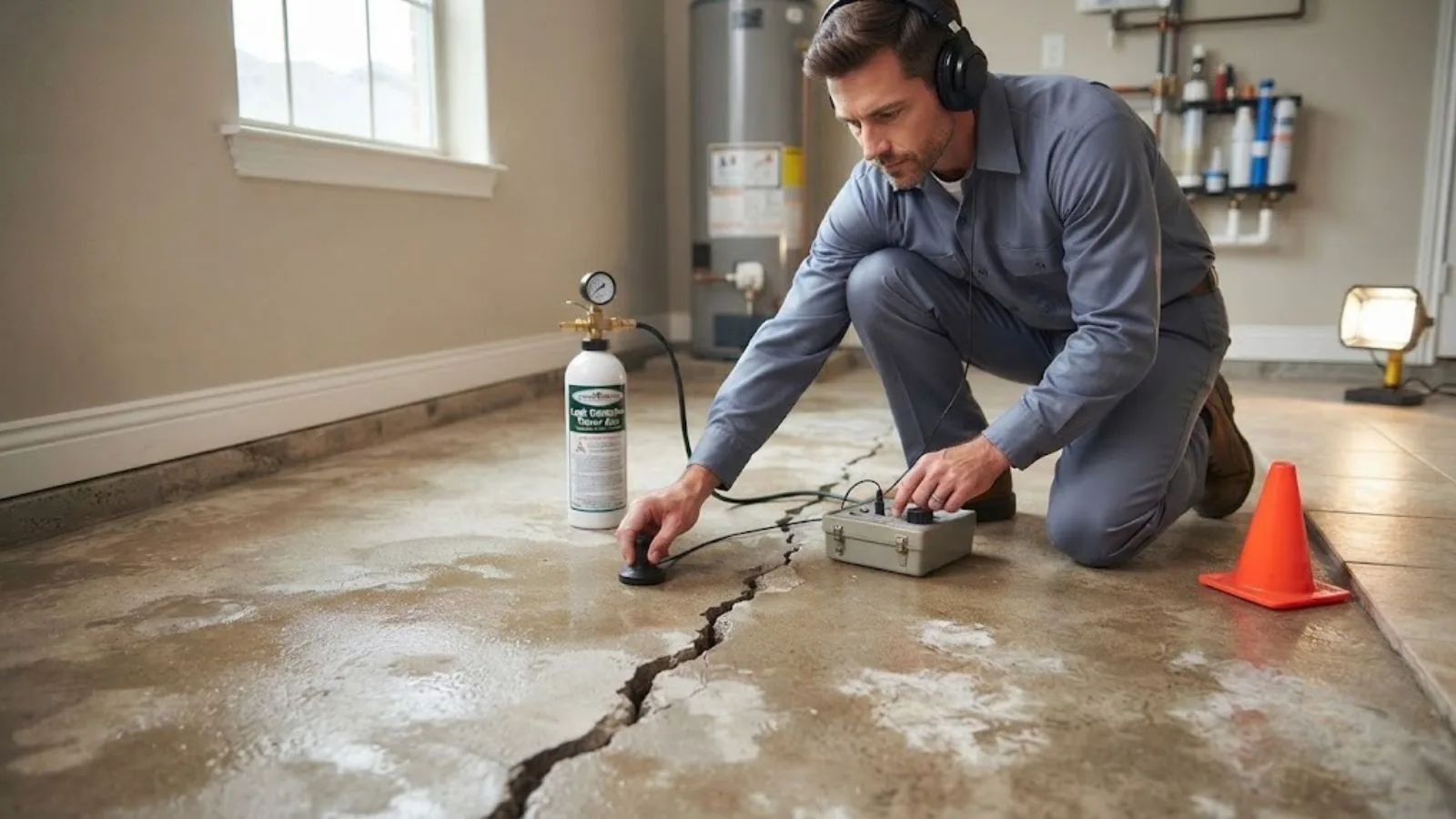
A good plumber starts by shutting off every fixture and watching the meter, then isolates the hot and cold sides to see which line is losing water. Acoustic listening and thermal imaging narrow it to a patch of floor. Our leak detection page explains each method.
This step matters for cost because the opening in the slab is only as small as the location is precise. A vague guess means a larger hole and a larger restoration bill.
Spot repair, reroute or repipe
A spot repair breaks the slab at the leak and splices in new pipe. A reroute abandons the leaking line and runs a new one through the attic or walls. A full repipe replaces the supply system. The slab leak repair page compares them in detail.
The cheapest option today is not always the cheapest over five years. Copper that has pitted in one place often pits in others. Ask the plumber what the rest of the pipe looks like and whether a second leak is likely, then decide with that in mind.
What homeowner insurance may and may not cover
Policies differ, so read yours or ask your agent. Many cover sudden damage to floors and walls caused by a leak, and many do not pay for the cost of reaching or fixing the failing pipe. Long-term seepage is often excluded.
Photograph the damage before anything is dried or removed, keep the plumber's written findings and ask the agent about deadlines for reporting a claim. A note that names the leak location and cause helps an adjuster.
Signs that a slab leak may be starting
A warm patch on the floor, the sound of running water when everything is off, falling water pressure, a musty smell and a higher water bill all point to a hidden leak. A meter that moves with every tap closed is the clearest test.
Catching it early keeps the repair small. Water under a slab can soften soil and stain flooring for weeks before it shows on the surface.
El Reno rules that touch a slab repair
El Reno adopts the International Plumbing Code (IPC) with local amendments and expects plumbing contractors to be state licensed and registered with the city. A repair that replaces pipe may need a permit, so ask El Reno Community Development at 405-262-2000 before work starts. You can confirm a plumber's state license on the Oklahoma Construction Industries Board lookup.
If your water bill jumps, the City of El Reno utility office at 405-262-4070 can share your usage history, which helps date the start of the leak. Homes in Yukon and Piedmont follow their own city rules, so confirm with those offices if you live there.
Source type: City code, municipal contacts and state licensing
Questions El Reno homeowners ask
It depends on how the leak is found, where it sits, the repair method and the floor above it. A plumber should give a clear price after locating the leak and before work starts. A number quoted before anyone searches is a guess.
Many policies cover resulting damage but not always the pipe or the access cost. Ask your agent, and get the plumber's findings in writing.
If water is running under the house and you cannot stop it, yes. Close the main valve and call the 24/7 line. A slow leak can wait for a daytime visit, but should not wait weeks.
Sometimes. A reroute avoids the slab, and lining can work in some pipes. A plumber will explain which options fit your house.
Slab homes with older copper lines, usually built from the 1970s through the 1990s, are the most common. Newer PEX homes have fewer pitting leaks.