
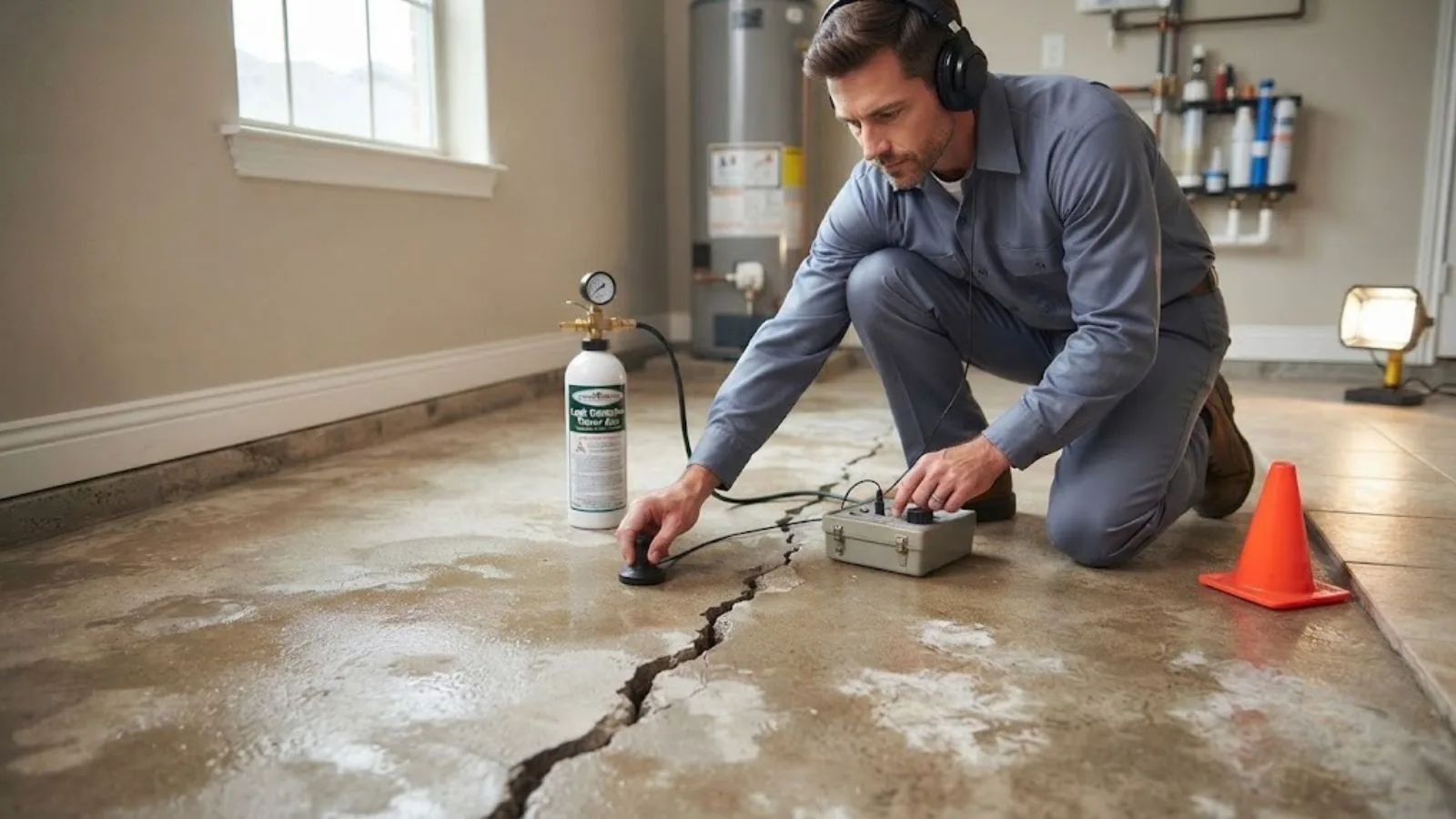
Symptoms of a slab leak
Call if you notice these
A slab leak rarely looks like a puddle. The signs are quieter.
- A warm patch on a tile or wood floor, which points to a hot water line.
- The sound of running water when every fixture is off.
- Water pressure that drops without explanation.
- Damp carpet, lifting flooring or cracks in a wall near the slab.
- A meter that moves with the house shut off.
Why lines under a slab fail
Copper lines can pit from the inside as chemicals in the water wear at the pipe, and can rub against concrete or gravel as the slab shifts through wet and dry seasons. Hot water lines expand and contract, which stresses joints and fittings.
In central Oklahoma, clay soils swell when wet and shrink when dry, and that movement can stress a foundation over years. The plumber will not guess the cause from the surface, which is why locating the leak comes first, using leak detection tools.
Pipe replaced under or through a slab must meet the International Plumbing Code (IPC), including sleeving where a line passes through concrete, and the new pipe should carry its ASTM marking.
Repair choices for a slab leak
| Option | How it works | Fits when |
|---|---|---|
| Spot repair | Break the slab at the leak and splice in new pipe | One clear leak and a sound pipe elsewhere |
| Reroute | Abandon the slab line and run a new one through walls or the attic | Repeated leaks or a long damaged section |
| Epoxy lining | A coating is applied inside the pipe | Where the pipe is in fair shape and access is hard |
| Repipe | Replace the home's lines | Failing pipe throughout. See repiping |
Think you have a slab leak?
Call the 24/7 line. A licensed plumber can be scheduled the same day when available.
Slab foundations across El Reno, Yukon and Piedmont
Slab-on-grade foundations are common in Oklahoma, and the neighborhoods that grew in the 1970s and 1980s often have copper supply lines poured into or under the slab. Newer subdivisions use PEX, which resists pitting but can still be damaged during construction.
If your house is older and you have had one slab leak, ask the plumber whether a second is likely. A pressure test across the system and a look at the pipe material help you choose between another spot repair and a reroute.
Documentation and coverage
Coverage differs by policy. Many pay for the damage a sudden leak causes to your home but not always for accessing the pipe. Ask your agent before work starts, and ask the plumber for a written note naming the leak and its location.
What affects the cost of slab leak repair
Slab leak questions
Yes. The line is open 24/7. Shut the main valve to stop the loss, then call. A licensed plumber is scheduled the same day when one is available.
Warm spots, a running sound and a meter that moves with fixtures off all suggest it. A plumber confirms with pressure and acoustic tests before cutting.
A spot repair opens a small area. A reroute goes through walls or the attic and avoids the slab. Ask which applies and what restoration is included.
A long-running leak can saturate the soil under a slab, which may contribute to movement. Fixing it promptly is the best way to limit that.
Often the resulting damage is covered while the pipe itself is not, but policies differ. Ask your agent and get the plumber's written findings.
Related work
Confirm the leak
Leak detection shows whether the problem is under the slab.
Outdoor line
A wet yard may be a water line issue.
Whole-house plan
Repiping ends repeat leaks in a failing system.