
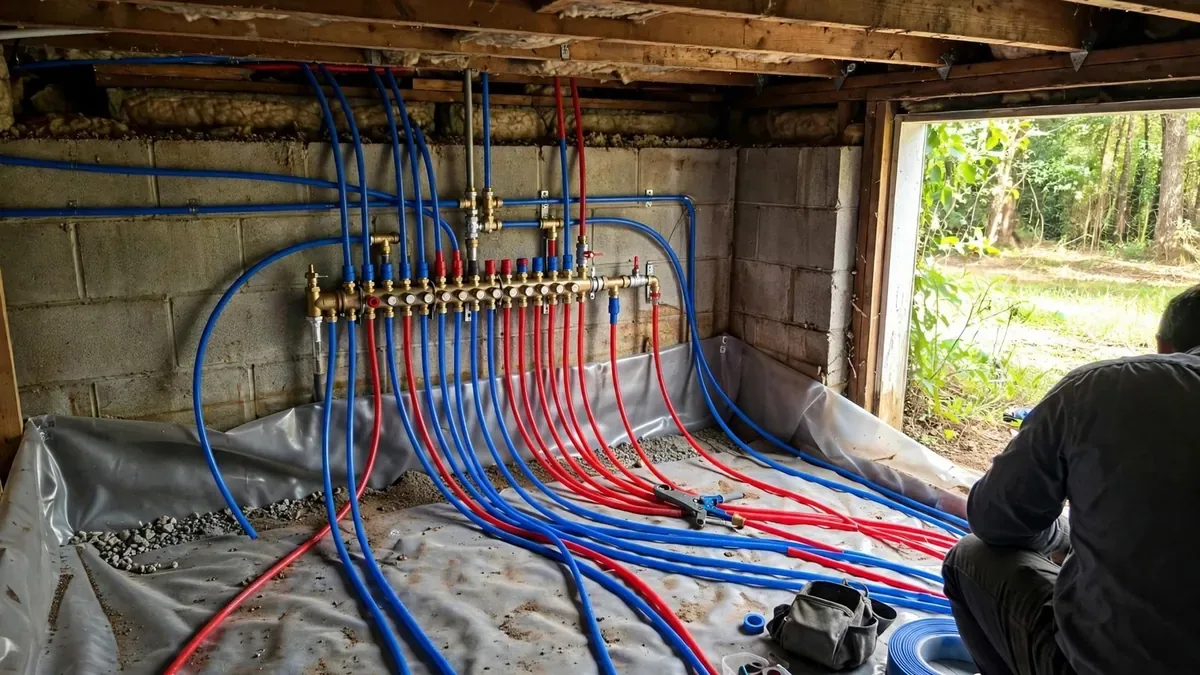
Reroute through the attic
On a slab home, the supply lines that feed fixtures often run under the concrete, which is why a leak there is hard to reach. A repipe abandons those lines and runs new ones overhead. The plumber opens small access holes in walls and ceilings, pulls new pipe to each fixture and reconnects.
The drain lines stay in the slab, since they are larger and do not usually leak under pressure. If a drain is also failing, that is a separate job. See sewer line repair.
Choosing the new pipe
| Material | Strengths | Cautions |
|---|---|---|
| PEX | Flexible, fewer joints, quick to install | Protect from sunlight and certain chemicals |
| Copper | Long record and durable | Higher cost and can pit in aggressive water |
| CPVC | Rigid plastic that handles hot water | Can become brittle over time |
When repiping makes sense
Repeated leaks in different spots, brown water, weak pressure and old polybutylene or galvanized pipe are common reasons. A single leak in a sound system may not justify a repipe. Compare the cost of repeated spot repairs against a full replacement, and ask the plumber to inspect the pipe and show you the condition.
See our repiping page for the decision guide, and consider leak detection first if you are unsure where the problem lies.
What the job looks like
The plumber walks the house, counts fixtures and plans routes. Water is shut off during parts of the work, and you may need to move furniture away from walls. New lines are run and tested at pressure before the openings are closed. Patching and painting may be separate.
Ask who handles the patching, how long water will be off and when the inspection happens. Time varies with house size and access.
What affects the price
The number of fixtures, the pipe material, how easy the attic is to reach, the layout of the house and the amount of wall repair all shape the price. A single-story ranch with a roomy attic is easier than a house with a low-pitch roof and finished ceilings.
Get a written quote that lists materials, openings, patching and permit status. A very low quote may omit wall repair or the permit.
What to expect at home
Expect dust, noise and short water shutoffs. Cover furniture, remove items from walls and plan for pets. Keep a few gallons of water for drinking and flushing on the day of the work. After the repipe, flush the lines at each fixture to clear debris.
Keep the plumber's warranty and any permit documents with your house records. They matter at resale.
Ten minutes of questions before you sign
Ask which pipe material the plumber proposes and why. Ask whether the old lines will be capped or left open, and how the capped lines are protected. Ask whether the quote includes patching drywall and painting, or whether another contractor does that.
Ask for a written schedule, the permit status and the warranty on the work and on the pipe. Ask what happens to your water service each day, and whether a pressure test is done before the walls are closed. A plumber who has done this work will answer without hesitation.
Options other than a full repipe
Sometimes the right answer is smaller. If one slab leak is the only problem and the pipe is otherwise sound, a spot repair or a single-line reroute can cost less and solve it. Our slab leak repair page compares these options. A plumber can also pressure test each line to show which are failing.
Epoxy lining is another option on some systems, where a coating is applied inside the existing pipe. It does not suit every pipe or every house. A plumber should explain the condition of the pipe before recommending lining, and should be clear about the warranty.
Repiping rules in El Reno
El Reno adopts the International Plumbing Code (IPC) with local amendments, requires plumbing contractors to be state licensed and registered with the city, and expects permits for work like this. Ask El Reno Community Development at 405-262-2000 about permit and inspection rules, and confirm your plumber's license on the Oklahoma Construction Industries Board lookup.
Slab homes are common in Yukon and Piedmont too. Many Yukon homes date from the 1970s through the 1990s, when copper and, in some homes, polybutylene pipe were used, so the age of your house is a clue to what is under it.
Source type: City code, state licensing lookup and public history
Questions El Reno homeowners ask
Usually not. The common method reroutes new lines through the attic and walls and abandons the old ones.
Often a few days, depending on size and access. Ask for a schedule.
PEX and copper are common choices. A plumber can explain which fits your house and water.
Not usually. It is shut off during connections and often restored at the end of each day.
Rarely for age or wear, though resulting damage may be covered. Ask your agent.