
The five-minute test
Turn off every fixture, the ice maker and the irrigation. Open the meter box, usually near the street, and look at the leak indicator, a small dial or triangle that spins when any water moves. If it spins, water is flowing. Note the reading, wait half an hour with nothing running and check again.
If the number changes, you have a leak. Close the house main valve and check once more. If the meter stops, the leak is inside the house. If it keeps moving, the leak is outside, between the meter and the house.
The EPA WaterSense program estimates that household leaks waste a large amount of water each year, and its fix-a-leak guidance, like this guide, starts with reading the meter.
Where bill-raising leaks hide
| Source | How to check | Fix |
|---|---|---|
| Toilet flapper | Add dye to the tank and wait fifteen minutes | Replace the flapper |
| Irrigation | Turn it off and re-read the meter | Repair the valve or line |
| Outdoor faucet | Look and listen at the bib | Replace the washer |
| Water heater | Check the relief valve line | Repair or replace |
| Service line | Wet yard with the house main closed | Water line repair |
| Under the slab | Warm floor or running sound | Slab leak repair |
The most common culprit
A toilet that runs on and off, or hisses, can waste a large amount of water. Add a few drops of food coloring to the tank, do not flush, and wait fifteen minutes. If color shows in the bowl, the flapper is leaking. A new flapper is inexpensive and takes minutes to install.
Check every toilet in the house, including guest bathrooms that are rarely used. A slow leak there can run for months.
Check the yard
Look for wet spots, soft ground or unusually green grass over the line from the meter to the house. Check the irrigation system, which can leak at valves, heads or underground pipe. A stuck valve can run for hours without notice.
If you find a wet spot, close the house main. If the spot stays wet, the leak is in the line from the meter. Our water line repair page covers what to expect.
When a plumber helps
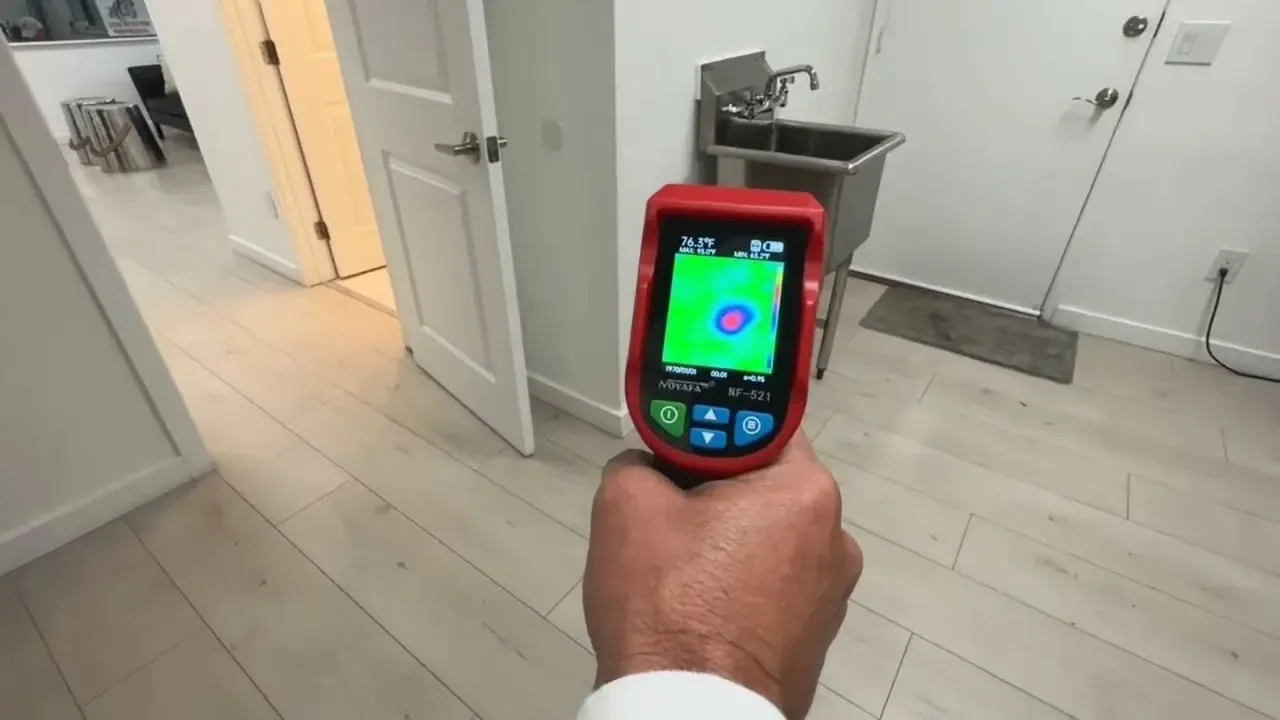
If the meter test shows a leak and you cannot find it, a plumber can use pressure tests, acoustic listening and thermal imaging to locate it with little damage. See leak detection for the methods.
A plumber can also tell you whether the pipe is failing in more than one place. That matters, because fixing one leak while others are waiting can lead to repeat visits.
What to do about the charge
Ask the utility whether any adjustment policy exists for a leak and what documentation it needs. A plumber's invoice that names the leak and the repair date can help. Do not assume an adjustment is available, and ask early.
Keep the meter readings you took and the bills before and after the repair. They show when the leak began and when it stopped.
How to prevent a repeat
Replace old toilet flappers every few years. Check hoses on washers and dishwashers. Know where your main valve is. Read the meter monthly, and compare your usage to the same month last year. A sudden rise is worth a look.
If your house is older, ask about the condition of the supply lines. If failures keep recurring, repiping may be the long-term answer.
Why a bill can climb without a leak
Not every high bill is a leak. Summer watering, a pool fill, guests, a new baby or a leaky habit like long showers can add up. Compare this bill with the same month last year, and look at the number of days in the billing period. A longer cycle means a bigger bill.
The meter test cuts through the guesswork. If the indicator is still with everything off, the water you were billed for was used, not lost. If it moves, you have a leak, and the next step is to find it.
Small leaks that add up
A faucet dripping once a second, a leaking hose bib, a worn washer hose and a sprinkler head that sprays at an angle all waste water. None of them looks dramatic, but each can add noticeable gallons per month. A weekly walk around the house and yard catches most of them.
See our faucet and sink repair page for drips, and replace old hoses on the washer. If water stains appear under a sink or around a toilet, treat them as leaks, not as old stains.
The El Reno utility office and your meter
The City of El Reno utility billing office at 405-262-4070 can explain your bill, share usage history and tell you where your meter and shutoff are. A leak before the meter is the city's to fix and a leak after it is yours. Ask about any leak adjustment policy, since rules vary and may change.
If you live in Yukon or Piedmont, call your own city. Plumbing repairs may need a permit. Ask El Reno Community Development at 405-262-2000.
Source type: City utility billing and building department
Questions El Reno homeowners ask
Check the meter with everything off. If the indicator moves, water is leaking.
Yes. A leaking flapper can waste a large amount of water over a month.
No. The owner is responsible for the line on the house side. Call 405-262-4070 to confirm.
Yes, with pressure tests, listening gear and thermal imaging.
Rarely the water itself. Resulting damage may be covered. Ask your agent.