
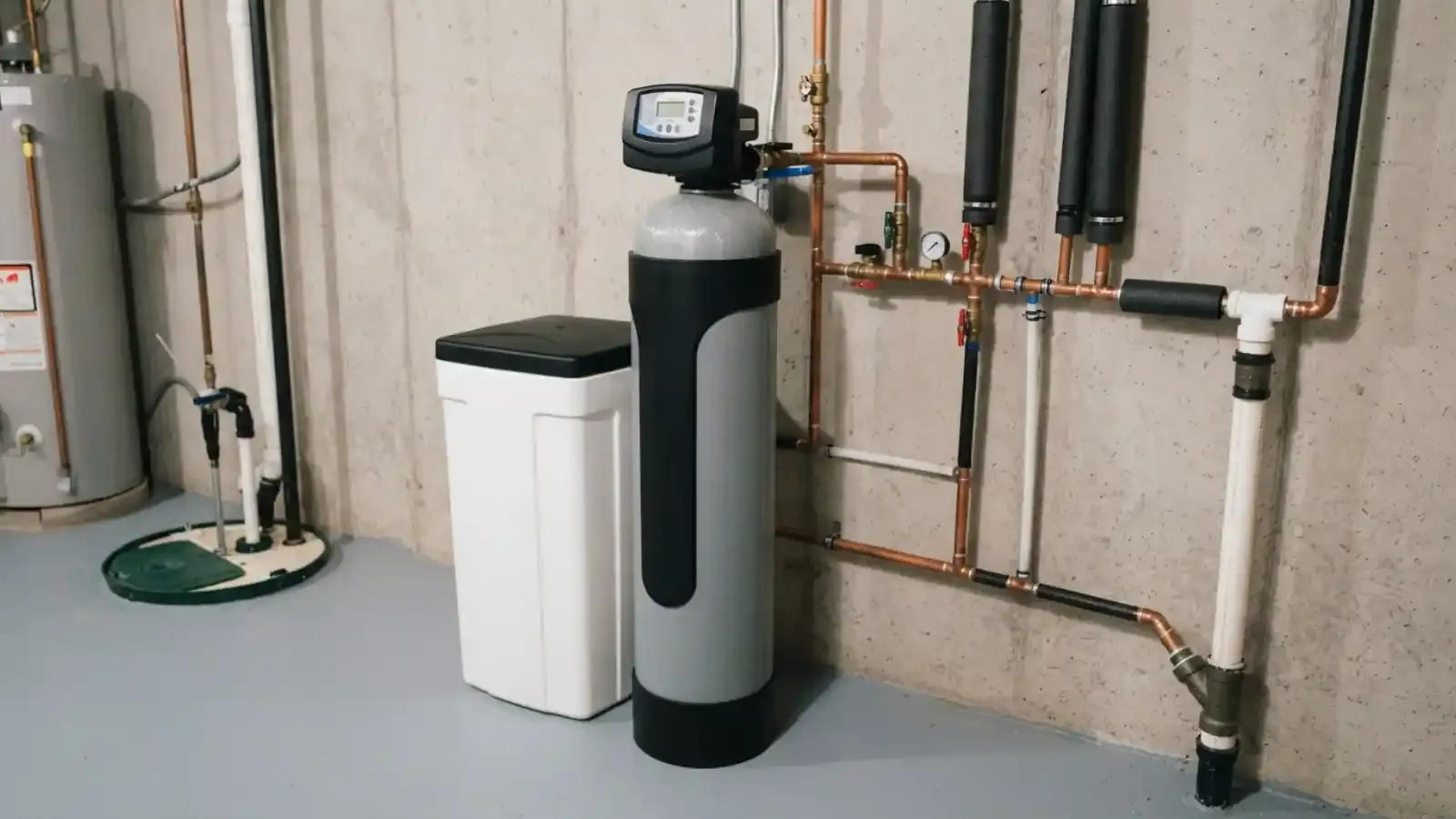
Test the water before buying anything
A water softener removes calcium and magnesium, the minerals that make water hard. A filter removes other things, such as sediment, chlorine taste or specific contaminants. They solve different problems, and buying one for the other's job wastes money.
Begin with the City of El Reno's water quality report, which you can request from the city, and a hardness test strip. If you are on a private well, which some homes outside the city are, a lab test is the right step, because well water varies by location. The Oklahoma Water Resources Board and local conservation offices are the right place to ask about well testing resources.
Softeners are tested under NSF/ANSI 44, filters for health claims under NSF/ANSI 53 and reverse osmosis units under NSF/ANSI 58, and the installation must follow the International Plumbing Code (IPC), including an air gap on the drain line.
Treatment choices and what each does
| System | Treats | Notes |
|---|---|---|
| Salt-based softener | Hardness | Needs salt and a drain line |
| Salt-free conditioner | Reduces scale formation | Does not remove hardness minerals |
| Sediment filter | Sand and particles | Needs cartridge changes |
| Carbon filter | Chlorine taste and odor | Whole house or under sink |
| Reverse osmosis | Many dissolved solids | Usually drinking water only |
Signs hard water is costing you
- White crust on faucets, showerheads and kettles.
- Spots on glasses and dishes even after a cycle.
- Soap that does not lather and leaves film.
- A water heater that is noisy or short lived.
- Dry skin and stiff laundry.
Want to treat your water?
Call the line. A licensed plumber can be scheduled the same day when available.
What owning a softener involves
A salt-based softener uses brine to recharge. You add salt, and the unit discharges wastewater to a drain during regeneration. The plumber installs a bypass valve so you can isolate it, and a proper drain connection with an air gap.
Some homes use a septic system, and the brine discharge from a softener may affect it. Ask your septic service and the plumber before you decide where the drain goes.
Installation rules
A softener ties into the main water line, so licensed work and a correct backflow arrangement matter. Check with El Reno Community Development at 405-262-2000 about permits.
Where to treat the water
Whole house
A unit at the main line treats every tap, the water heater and the washer. This protects appliances most.
Kitchen only
An under-sink filter or reverse osmosis unit treats drinking and cooking water without touching the rest.
Water heater only
Some homeowners soften only the hot side or the heater feed to cut scale where it hurts most.
Outdoor spigots
Soft water on garden hoses is rarely worth it, and most whole-house setups bypass them.
What a softener will and will not do
A softener reduces scale and helps soap work. It does not make water safe to drink if it is contaminated, and it does not remove chlorine or most chemicals. Softened water also contains a little sodium or potassium from the exchange process, which matters to people on restricted diets, so ask a doctor if that applies to you.
If your concern is health or taste rather than scale, get a lab test for the specific contaminant and choose a filter certified for it. A plumber installs the equipment, but the choice of treatment should follow the test result, not a sales pitch.
What affects the cost
Softener and filtration questions
White scale, spotted glass and poor lather are signs. A test strip or the city water report gives a number.
No. A softener removes hardness minerals. A filter removes particles, chlorine or other contaminants. You may need one, the other or both.
Often yes, if it is protected from freezing and has a drain. The plumber will check.
It depends on the system. Ask your septic service before choosing.
Our line is open 24/7. A licensed plumber is scheduled the same day when one is available, though a planned install usually happens in daytime.
Related services
Water heaters
Replacement and tankless units benefit from softer water.
Fixtures
Faucet repair covers aerators and cartridges.
New plumbing
Plumbing installation covers new lines.