
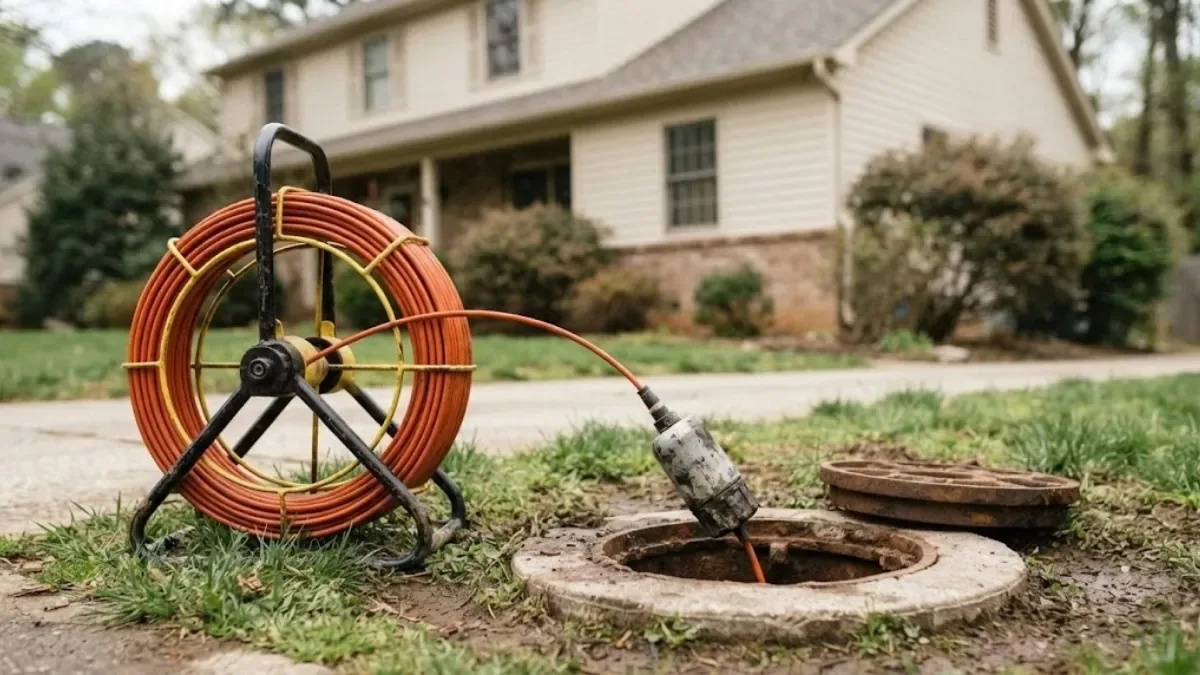
A look inside the pipe
A small waterproof camera on a flexible cable is fed into the sewer line through a cleanout. A screen shows the pipe in real time, and a locator at the surface marks the camera's position so the plumber can tell you how far from the house a problem sits and how deep it is.
You should leave with the footage, a plain explanation of what it showed, and a recommendation that matches. If the line is sound, you pay for the inspection and nothing else. If it is damaged, you know what to fix before the pipe fails.
How an inspection visit goes
Find the cleanout
The plumber locates the access point outside the house or pulls a toilet if none exists.
Clear the line
A quick cleaning may be needed so the lens can see.
Run the camera
The cable runs to the connection with the city main, recording as it goes.
Review and report
You see the footage and hear what it means and what to do.
When a camera inspection is worth paying for
- You are buying a house built before the 1980s and want to know the line's condition before closing.
- A drain has clogged twice in a year in the same line.
- A cable or a drain snake has stopped at a fixed distance.
- You see a wet spot, smell sewage or notice a dip in the yard over the line.
- You are planning to remodel, add a bathroom or build over the line.
Pre-purchase inspections in older neighborhoods
El Reno was incorporated in 1890, and homes near the Rock District and the Carnegie Library are among the oldest. A standard home inspection checks visible fixtures but does not look inside the buried sewer lateral. Older laterals can be clay, cast iron or early plastic, and any of them can hide root damage or a sag that only a camera shows.
A camera inspection takes a short visit and gives you footage you can bring into negotiations. If the line needs work, the price becomes part of the deal rather than a surprise after closing. Out-of-town buyers can ask the plumber to send the video.
Planning an inspection?
Call us and ask for a video inspection. A plumber can be scheduled the same day when available.
What the footage can show, and what it means
| Finding | What it means | Typical next step |
|---|---|---|
| Roots at joints | Water is entering the pipe at the joint | Cutting and jetting, with a repair or liner if it recurs |
| Belly or sag | Water pools and solids settle | Watch it, or repair the low section |
| Cracked pipe | Soil and water can enter the line | Lining or spot repair |
| Offset joint | Two pipe ends have moved apart | Spot repair |
| Clean, smooth pipe | No visible defects | No repair needed, and a baseline for later |
What affects the cost of a camera inspection
Sewer camera inspection questions
Often, yes. The line is answered 24/7 and a plumber is scheduled the same day when one is available. A planned inspection before a closing date works best when you call a few days ahead.
No. The camera is designed for drain lines and moves slowly through them. A line in very poor condition may need a gentle approach, which the plumber will explain.
Ask when you book. Many plumbers can provide the footage so you can share it with a seller, an insurer or a contractor.
Most residential cameras reach a long way, far enough to cover the line from the house to the connection with the city main. Ask the plumber what length applies to your property.
It is less urgent, though still useful before a warranty ends or after a long period of drain trouble. Faster-growing places like Piedmont have newer lines, but construction debris can still cause problems.
After the inspection
If the pipe needs cleaning
Hydro jetting is the usual choice when the camera shows buildup.
If the pipe is damaged
Sewer line repair covers lining, spot repair and replacement.
If you also need water line work
A water line repair page covers the pressurized side of the property.