
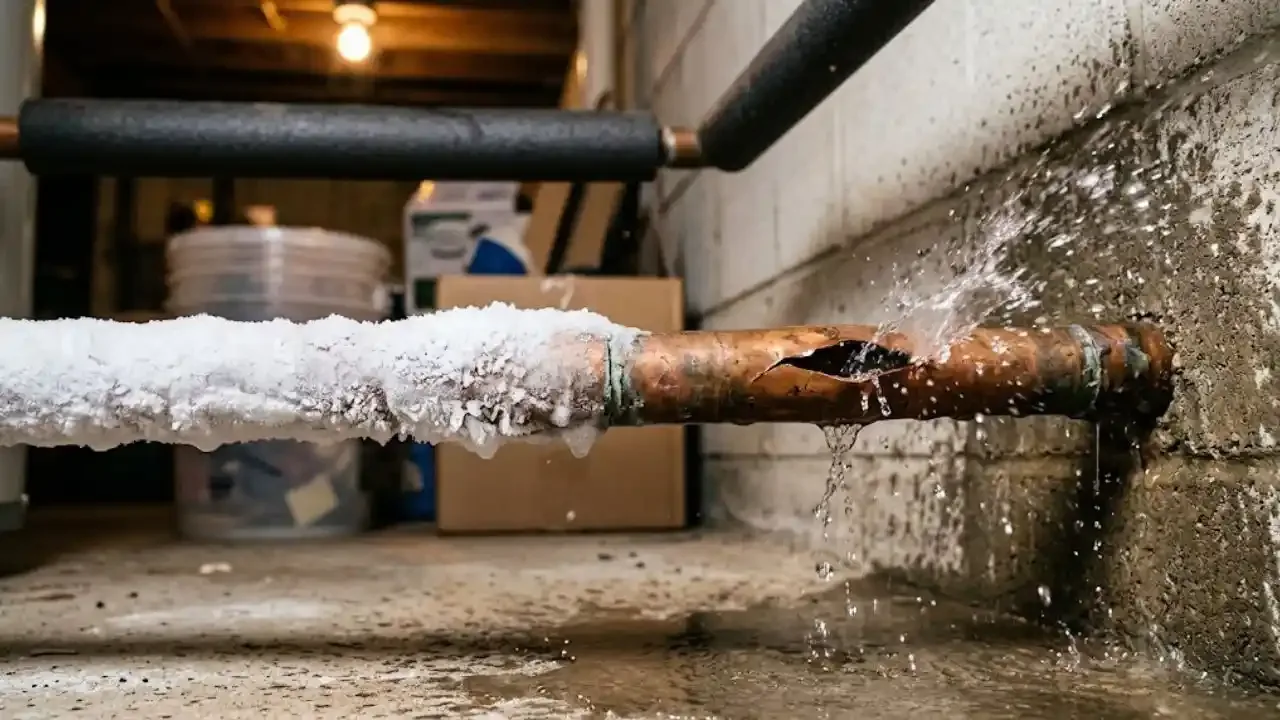
Stop the water
Close the nearest shutoff valve. Fixtures have their own valves, usually under the sink or behind the toilet. If you cannot find the right one or it does not close, shut the main valve where the water enters the house. Open the lowest faucet to drain the lines.
Know where your main valve is before you need it. Test it once a year. A valve that has not turned in years may seize, and you do not want to learn that during a flood.
Repairs to supply pipe should use fittings marked to the standard for that pipe, such as ASTM F876 for PEX, and follow the International Plumbing Code (IPC).
Where leaks usually come from
| Location | Typical cause | Action |
|---|---|---|
| Under a sink | Loose supply line or drain connection | Tighten or replace |
| Behind a toilet | Worn supply line or tank bolt | Replace the part |
| Ceiling stain | Pipe above or a roof leak | Find the source before opening |
| Wet floor near the heater | Relief valve or tank leak | See water heater replacement |
| Soggy yard | Service line leak | See water line repair |
A simple search for a hidden leak
Turn off every fixture, then check the water meter. If it moves, water is flowing somewhere. Close the house main and check again. If the meter stops, the leak is inside the house. If it keeps moving, the leak is between the meter and the house. Our leak detection page explains these tests and the tools plumbers use.
Look at the ceiling below bathrooms, the walls behind sinks and appliances, and the floor around the water heater. A musty smell and a stain that grows are clues.
What you can do until the plumber arrives
A rubber patch with a clamp, a repair sleeve or self-fusing tape can slow a pinhole leak in a pipe for a short time. They are temporary. A pipe with a pinhole is often corroded elsewhere.
Do not use caulk or glue on a pressurized pipe. Do not wrap a leaking pipe and walk away. A temporary fix without a follow-up repair often ends in a larger failure.
Dry it out fast
Water soaks into drywall and flooring in hours. Remove standing water, run fans, open windows if the weather allows and use a dehumidifier. Mold can begin growing within a couple of days in damp materials. If the damage is large, a restoration company may be needed.
Photograph the damage, keep receipts and call your insurer promptly. Many policies cover sudden leaks but not long-term seepage.
Signs the repair is not a DIY job
Call a plumber for leaks inside walls, leaks in a slab, any leak you cannot stop, leaks at the water heater, leaks that return after a repair and any sign of sewage. Also call if you are unsure about local code or permit rules.
A licensed plumber can repair the leak and check the rest of the system. If the pipes are failing throughout, they can explain whether repiping makes sense.
Habits that prevent most leaks
Replace braided supply lines every several years. Exercise shutoff valves once a year. Check under sinks monthly. Insulate exposed pipes before winter. Know where your main valve is and label it. If you will be away for a long time in winter, shut off the water and drain the lines.
A leak sensor under the water heater, the washer and each sink costs little and can alert you early.
How the pipe type shapes the repair
Copper leaks often start as pinholes, which look like a tiny spray or a green stain. PEX is more likely to leak at a fitting than in the tube. Galvanized steel rusts from the inside and can leak at threads. Polybutylene, a gray plastic used in some older homes, can fail at fittings. CPVC can crack where it is stressed.
Knowing the material tells the plumber what to carry and how to repair. If you can, photograph the pipe and its markings when you call. A repair that works on copper may not fit PEX. If a system shows repeated failures, a pattern of leaks is the reason to ask about replacement.
Leaks at the water heater are different
A drip from the relief valve discharge pipe can be a sign of high pressure or high temperature. A drip from the tank body is a failed tank. A drip at the inlet or outlet connection may be a fitting. Do not cap a relief valve discharge. It is a safety device.
Our water heater repair page explains what to check. If water is pooling, turn off the cold supply to the heater and the fuel, then call.
Reporting leaks and finding the shutoff in El Reno
If a leak is in the street or at the meter, the City of El Reno utility at 405-262-4070 handles it. A leak after the meter is the owner's. If you cannot find your main shutoff, the city can tell you where the meter valve is. Water bills can reveal a hidden leak, and the office can share usage history.
Plumbing work often needs a permit and a licensed plumber under the city's adoption of the International Plumbing Code. Ask El Reno Community Development at 405-262-2000. Homes in Yukon and Piedmont follow their own offices.
Source type: City utility and building department
Questions El Reno homeowners ask
Close the nearest shutoff or the main valve, then call a plumber if you cannot fix it.
Check your water meter with all fixtures off. If it moves, water is leaking.
Only as a short-term measure. A permanent repair is needed.
Often the resulting damage is covered if it is sudden. Ask your agent.
Yes. The line is open 24/7. Close the main and call.