
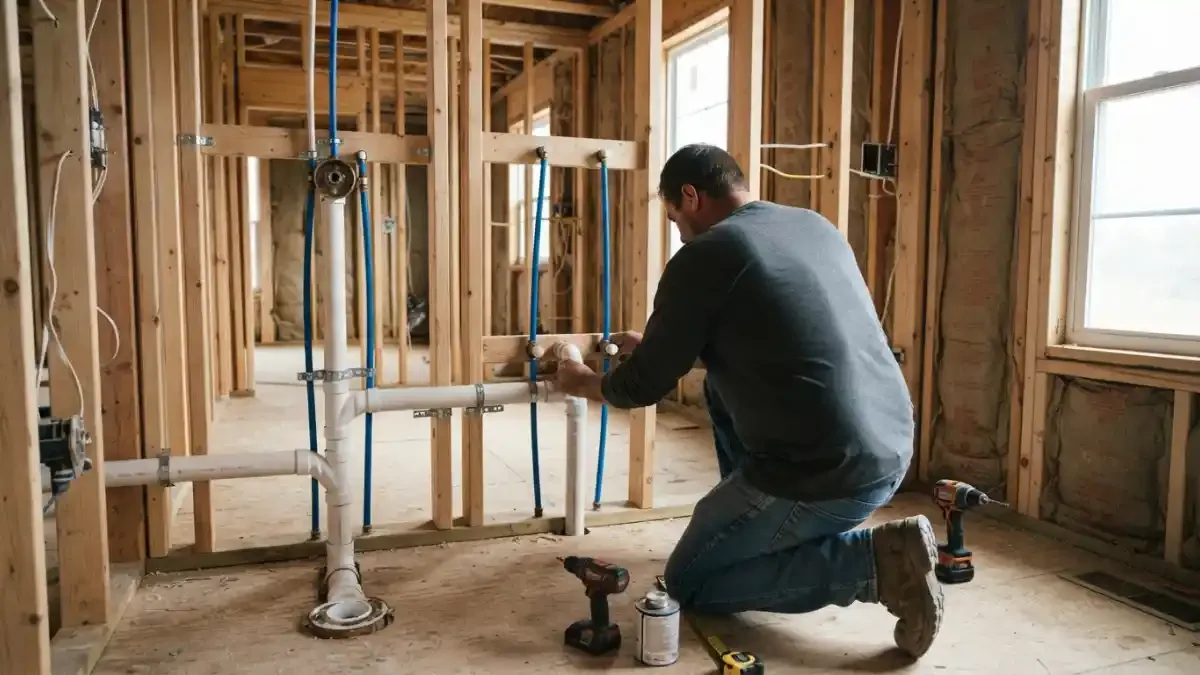
Why drains need air
Water falling down a drain pushes air ahead of it and leaves a vacuum behind it. The vent supplies air so the vacuum does not pull water out of the traps under your sinks. Without it, drains gurgle, run slowly and sometimes let sewer odor into the room.
The vent opening on the roof must stay open. Anything that seals it, from a bird nest to a solid cap to a layer of ice, can cause trouble at the fixtures below.
Types of vent covers
| Type | Good for | Watch for |
|---|---|---|
| Open pipe with a screen | Keeping out birds and large debris | Fine mesh can clog with leaves and ice |
| Vent cap with a hood | Keeping rain out of the pipe | Must leave an opening of the same size |
| Roof flashing boot | Sealing the roof around the pipe | The rubber cracks with age and leaks |
| Air admittance valve | Fixtures that cannot be vented through the roof | Local code limits where it can be used |
| Storm collar | Wind and sleeting rain | Does not replace a screen |
Signs the vent is blocked
Gurgling from a toilet or sink when another fixture drains, slow drains throughout the house, and sewer odor inside are the signs. If a drain clears with a cable but gurgles again soon, ask whether the vent was checked.
A plumber can run a camera or a cable through the vent from the roof, or flush it with a hose. Do not climb a steep or wet roof yourself.
The flashing is the part that usually fails
Most leaks near a vent do not come from the cap. They come from the rubber boot around the pipe, which cracks in the sun. Water runs down the pipe and shows up as a ceiling stain.
A roofer or plumber replaces the boot. If the pipe itself is cracked, that is a plumbing installation repair. A stain that grows after rain should be checked soon.
After hail and wind
Central Oklahoma sees hail and strong wind each spring, and vents are among the things that get knocked loose. After a storm, look from the ground for a missing cap, a bent pipe or debris. If drains behave oddly afterward, mention the storm when you call.
A cover that fits snugly and has an opening the same size as the pipe is the safe choice. Avoid sealing the top with anything solid, and avoid homemade caps.
A five-minute ground-level inspection
Walk around the house after a storm and look up at the roof. You are looking for the vent stack, usually a three or four inch pipe poking a foot or so above the shingles, often near the back of the house. Check that it is still straight, that a cap or screen is still in place and that no debris is sitting on or in it.
Inside, run water in each sink and watch the drains. A healthy system drains smoothly and quietly. A drain that gurgles, burps or leaves a bubble in the toilet bowl after a nearby fixture runs is telling you the air supply is limited. Write down which fixtures react, because a plumber can often tell from the pattern whether the problem sits in one branch or the main vent.
Frost can close a vent from the top
In very cold weather, warm moist air rising from the drain can freeze on the rim of the pipe and slowly narrow the opening until it closes. This is more likely with a small diameter vent or a screen with fine mesh. The result is the same gurgling and slow draining, appearing only on the coldest mornings.
If that sounds familiar, a plumber can check whether the vent is the right size where it leaves the roof. Some codes call for an increase in diameter before the pipe goes through the roof for exactly this reason, and it is a cheap change compared with repeated service calls.
Venting rules in El Reno
El Reno adopts the International Plumbing Code (IPC) with local amendments, and that code sets how vents are sized, how high they must rise above the roof and where they may terminate. A vent change is plumbing work, so ask El Reno Community Development at 405-262-2000 whether a permit applies before altering one.
If you live in Yukon or Piedmont, confirm with that city. A licensed plumber can check the work against code, and the Oklahoma Construction Industries Board lookup confirms a license.
Source type: City plumbing code and state licensing
Questions El Reno homeowners ask
Not always. A screened or hooded cap can keep birds and rain out, but it must not restrict airflow. Ask a plumber what suits your roof.
It can cause slow flushing and gurgling. A true clog sits in the pipe, while a vent problem shows at several fixtures. A camera helps tell them apart.
Dry traps, a blocked or broken vent, or a cracked drain are possible. Run water in unused drains, and call if the smell persists.
Most drain systems need vents under the plumbing code. Ask El Reno Community Development at 405-262-2000 about your case.
Only if you can reach it safely from the ground or a ladder on a low roof. A plumber can do it with a camera and proper equipment.