
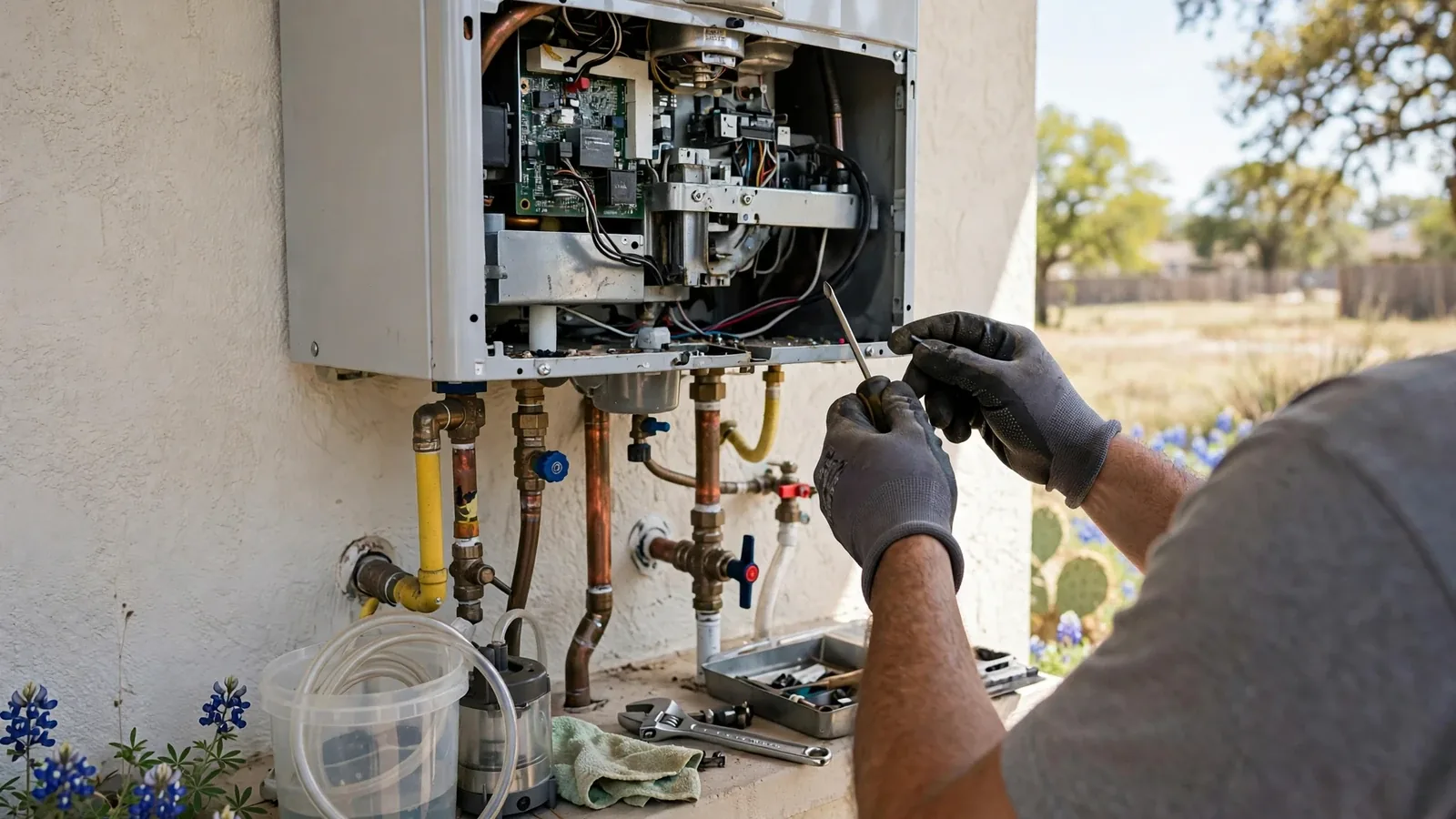
Exhaust is the hazard
Gas combustion produces carbon monoxide, an odorless gas that is dangerous in a closed space. A tankless unit burns hot and vents hot, and its exhaust has a lot of moisture. That is why vent materials, joints and slope are specified by the manufacturer and the code.
Always install carbon monoxide alarms near sleeping areas. They are cheap protection for any home with a fuel-burning appliance.
Common tankless vent arrangements
| Type | How it works | Notes |
|---|---|---|
| Direct vent, sealed combustion | Draws air in and sends exhaust out through two pipes or a concentric pipe | Common and efficient |
| Power vent | A fan pushes exhaust out | Needs electricity |
| Condensing vent | Cooler exhaust that forms acidic condensate | Uses plastic pipe and a condensate drain |
| Atmospheric vent | Relies on natural draft through a metal flue | Often older units |
| Through the roof or the wall | Termination location | Clearances from windows and meters apply |
The pipe has to match the unit
Condensing units run cooler and use plastic vent pipe approved by the manufacturer, while non-condensing units use stainless steel. Do not mix materials. The installation manual lists approved pipe, maximum run length and the number of elbows allowed.
A long run or too many bends reduces the unit's ability to push exhaust out. That is one reason a swap from a tank to tankless is not just a matter of hanging a box on the wall. The plumber has to confirm the path before you commit.
Condensing units need a drain
Condensing units collect acidic water as the exhaust cools. This condensate must drain to an approved location, often through a neutralizer. A line that clogs or freezes can shut the unit down, so the drain needs care.
In garages and unheated spaces, protect condensate lines from freezing. Our tankless water heater page explains maintenance for scale and venting issues.
Where the exhaust may end
The vent termination must be far enough from windows, doors, air intakes and gas meters, and it must be above expected snow and ground level. The distances come from the code and the manufacturer's manual. A wall termination near a neighbor's window or a porch can create a nuisance or a hazard.
This is one reason a site visit matters. A plumber walks the route, measures the clearances and confirms that the plan works before ordering equipment.
What a plumber checks after the install
After installation, the plumber checks all vent joints for tightness, confirms the slope, tests combustion with an analyzer where required and verifies that the unit shuts down safely if the vent is blocked. You should see the manufacturer's startup checklist completed.
Ask for the manual and the warranty paperwork. Keep them with your records, and plan annual flushing and an occasional visual check of the vent terminal for nests and debris. See water heater installation for planning steps.
Electric tankless units need no vent
An electric tankless heater has no combustion, so it needs no vent. The tradeoff is electrical demand. Many whole-house electric units draw a very large amount of current, and older panels may not have the capacity. A licensed electrician or plumber must size the circuit and the panel.
In a small home or for a single point of use, such as a distant bathroom sink, an electric unit can be a good fit. For a whole household with several showers, gas is more common. Weigh the cost of a new circuit against the cost of a gas line upgrade and venting.
Freeze protection for the vent and the unit
Oklahoma sees hard freezes some winters, and vent terminations and condensate lines are exposed. A condensate line that freezes will stop a condensing heater. Keep the line short, sloped and insulated where it passes through cold spaces, and know that a unit in a garage needs protection too.
If your tankless unit shuts down on a cold morning, check the display for an error code and call. Do not keep resetting it. Our water heater repair page lists what to check first.
Venting and permits in El Reno
El Reno adopts the International Plumbing Code (IPC) with local amendments, and a gas appliance vent change usually involves a permit and an inspection. Ask El Reno Community Development at 405-262-2000 how it applies to your property, and have a state-licensed plumber do the work. The Oklahoma Construction Industries Board lookup confirms licenses.
Homeowners in Yukon and Piedmont should check their own city offices. If you smell gas, leave the house and call your gas utility from outside.
Source type: City code and state licensing lookup
Questions El Reno homeowners ask
Sometimes, with a liner that matches the new unit. The plumber must confirm size, material and condition.
It has a fan, so you may hear it. Placement and enclosure affect the noise.
It is acidic water formed from exhaust. It must drain properly, often through a neutralizer.
It is not recommended. Vent errors are a carbon monoxide risk. Use a licensed plumber.
Often yes. Call El Reno Community Development at 405-262-2000.